PSG-Roma 2-2. Monza. Our limitation is that we don’t believe in ourselves enough.

We went to Paris just as we approached our matches against Real Madrid and Man Utd: confident in our own ideas. This time, however, the result didn’t see us defeated. In fact, we might even have missed a chance to put the game to bed. But, dear reader, bear in mind that we were up against the strongest team in the world—two-time consecutive European champions. We can be pleased. Now, Monza awaits us, on the very same Sunday that Spain will decide its own fate. My advice to Spain, to the world, and to Roma is this: believe a little more. Do not be afraid to embrace a strategy of optimism and hope—both in politics and for Roma.
Roma did not change its strategy in Paris; the team went there employing a high press and an attacking style of play, putting even the world’s strongest side under pressure. Two comparisons come to mind. One is the victory of Velasco’s Italian national volleyball team over the USSR in the 1989 World Cup—a match in which Italy defeated the Soviets 3–0, despite the USSR being considered unbeatable at the time. I recall *La Repubblica* reporting on a Japanese commentator who could hardly believe his eyes, exclaiming, "Incredible Italy!" Although Italy had already won the European Championship in 1989, it was that specific match that made us realize we were witnessing a kind of sporting revolution. In that 1989 World Cup, Italy ultimately finished second behind Cuba—the very same opponent they would face again in the 1990 World Championship final, a match that Italy went on to win.
| 5th UCL | First Half | Second Half | Final Score | Scorers |
 | 31′ Zabarnyi, Pen. Dembelè | |||
 | 5′ Hermoso, 78′ Pen. Malen |
The second example is Sinner’s victory over Djokovic in the Italy vs. Serbia semifinal at the 2023 Davis Cup. In the second set, Djokovic held a 0-40 lead—a position that would have secured the win for Serbia—but Sinner fought back to win the match in the third set. This paved the way for the first Davis Cup title in a streak that is still ongoing, and it marked the beginning of Sinner’s historic tennis career, which has since seen him go on to win several Grand Slam titles.
But the story of this Roma season is still waiting to be written. It would be a mistake to underestimate Monza now; they are an excellent opponent—a team clearly on the rise, having just beaten Fiorentina 3-0 a few days ago. At the same time, however, we must be confident in ourselves. We must be sure of our own strength.
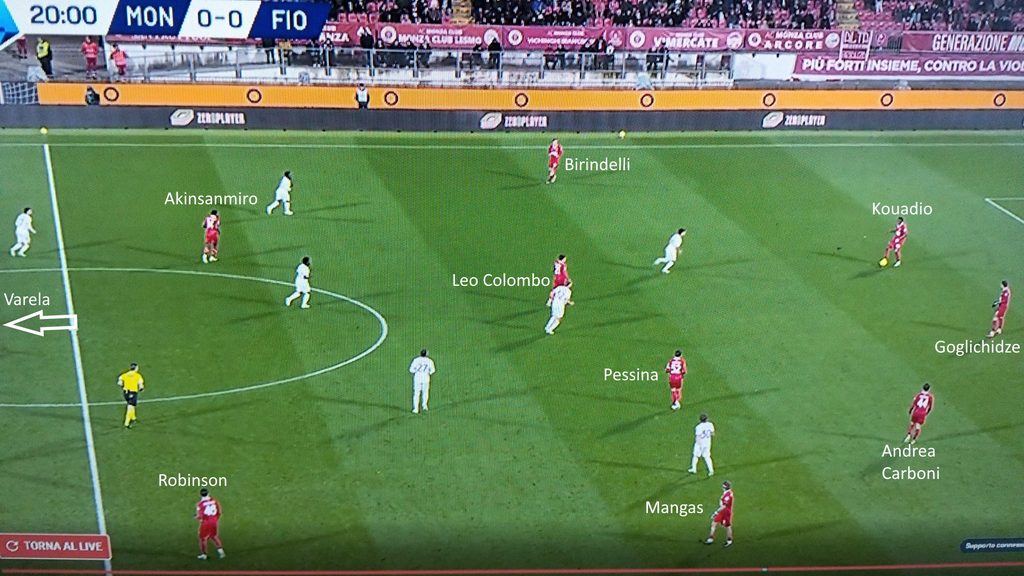
They attack down the right flank with a combination of Kouadio, Idrissa Touré (or Birindelli), and Akinsanmiro, and down the left with Mangas—who is primarily left-footed—and Robinson (or Dany Mota).
The playmaker is Pessina or Mout.
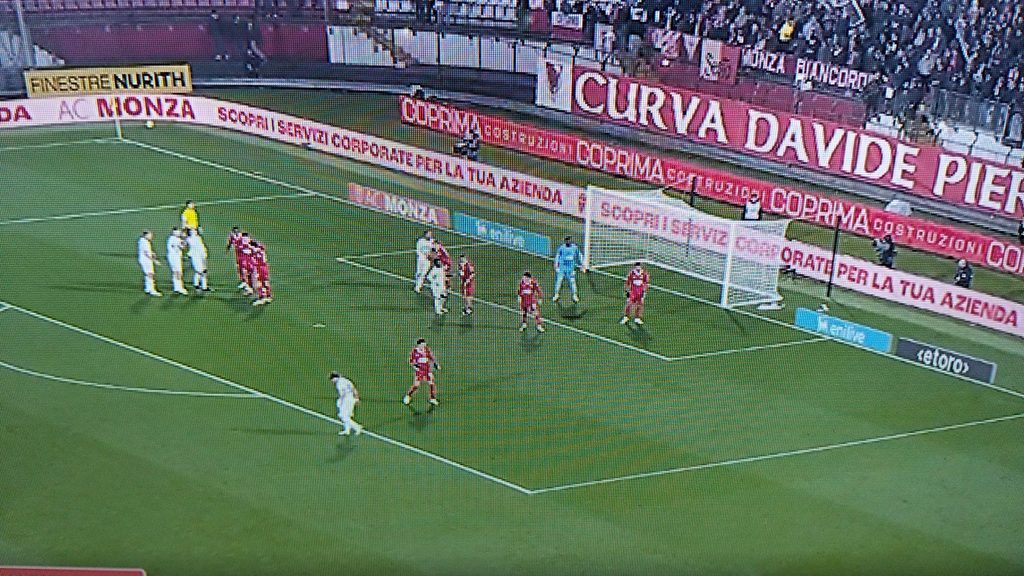
Be caregul on their corners on Goglichidze
In attacking phase, the most dangerous man is Varela.
Roma, therefore, needs to have greater belief in its own qualities (while always remaining capable of tracking back effectively to prevent counterattacks). The Roma fans in the stands, too, must place more trust in this club. They can fuel optimism; they must offer strong support to Roma. And how do an attacking style of play—fostering hope and optimism, and providing steadfast support for Roma—translate into the realm of politics? They translate into a politics of hope, brotherhood, solidarity, and positive sentiment, standing in opposition to a politics defined by hatred, resentment, and negative sentiment.
The strategy of hope and optimism in politics. In the political arena, the embodiment of this strategy is Pedro Sánchez, who is—or so I hope—in the midst of a major comeback against the right. Sánchez did not chase the right on issues that favor them, such as immigration and security. Instead, he presented the facts. Is it not true that crime has decreased, despite the constant, overwhelming barrage of reports to the contrary on television? Is it not true that immigration boosts the GDP, thereby fostering prosperity for everyone? For these reasons, I am confident that he will be confirmed as Prime Minister of Spain.

The opposite of the politics of hope and optimism, in short, of good feelings, is to fuel fear, resentment, and hatred. This is what Ben Gvir and Netanyahu do. They maintain power over the perceived discomfort, and therefore mental distress, of the population, and meanwhile continue to unscrupulously shed blood, persisting in selfishness and corruption. Then we should not be surprised if more and more Israeli soldiers, forced to kill children, are committing suicide (here the Haaretz article). That is why you must offer the people hope, brotherhood, and solidarity—because these, in turn, translate into economic well-being, and consequently, mental well-being as well.
After all, believing in hope is what prominent religious figures have asked of us throughout history. And given that Rome is the cradle of Christianity, one should recall the teachings of Jesus Christ—“love your neighbor as yourself”—and of Saint Francis (this year marks the 800th anniversary of his birth). Saint Francis even approached the formidable Saladin to call for peace and interreligious dialogue—a goal I, too, advocate for in my own modest way—at a time when religious conflict was even more severe, fueled by the Crusades launched by us Europeans. Therefore, the true representatives of any religion are those political figures who promote hope, brotherhood, and optimism, rather than those who sow hatred, resentment, and anger.
And yet, believing in hope—in good sentiments—is very difficult. You risk looking like a fool. You risk ending up like Voltaire’s Candide. And yet, this is the right path. In politics, it is the path that leads to economic growth. In life, more generally, it helps you escape the mental distress of viewing everyone as an enemy. As for Roma, we are strong, and we must be highly ambitious. Our only limitation is that we don’t believe in ourselves enough.
Daje Roma!
Giordano Sepi